
What if I told you that your favorite craft brewery may be telling a better story than your church campus?
That may sound like an odd comparison, but hear me out.
Some of the most memorable places in our communities are not necessarily the biggest, newest, or most expensive. They’re simply places that make people feel welcome. They invite you to linger. They lower your guard. They communicate, without saying a word, “You belong here.”
Ironically, some of my deepest experiences of Christian community didn’t happen inside a church building at all.
They happened in a living room.
Picture this.
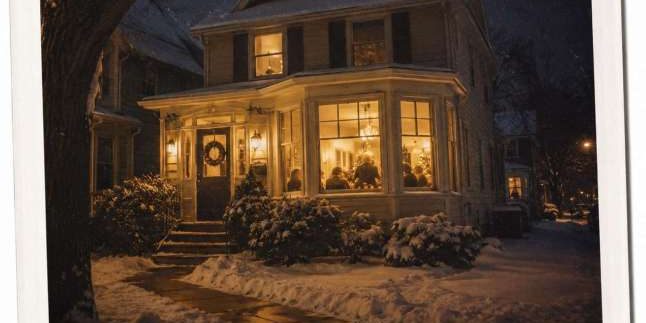
You’re a freshman in college. It’s snowing on a quiet December evening. You walk down a historic street lined with old homes, each glowing warmly against the dark winter sky. One house stands out. Through the bay window you see the soft flicker of a fireplace. You hear laughter before you even reach the porch.
The door opens almost immediately.
“Come on in!”
The home is small, but it feels alive. Worn leather chairs, mismatched furniture collected over decades, family photos, bookshelves, board games, Christmas music quietly playing, and the unmistakable smell of taquitos fresh from the oven.
Coats pile onto a rocking chair by the front door. Snow-covered boots line the entryway. Before long you’re sitting in a circle around the fireplace with people who were strangers only minutes earlier.
Conversation gives way to prayer.
Prayer leads to Scripture.
Scripture leads to stories.
Stories lead to tears, laughter, encouragement, and friendship.
When the evening ends, someone tells you, “Drive safe. We’re really glad you came.”
You leave with far more than a Bible study.
You leave with a family.
That memory has stayed with me for years because it shaped more than my opinion of those people. It shaped how I viewed the Church itself.
Now, to be clear, a small group gathering is not the same thing as the gathered church on the Lord’s Day. Scripture gives unique importance to the assembled church for preaching, prayer, singing, the ordinances, and mutual encouragement (Hebrews 10:24–25; Acts 2:42). I would never want to confuse those categories.
But it does raise an important question.
How does the physical environment of our churches help—or hinder—the kinds of relationships we long to see?
After serving in multiple churches as a Creative Director, ministry leader, volunteer, and church member, one observation continues to surface:
Most church buildings tell people what they believe. The best ones tell people they belong.
The Problem
There are many reasons churches across America struggle to grow spiritually and numerically. Faithfulness cannot be reduced to architecture, branding, or guest experience.
Only God saves.
Only God transforms hearts.
As Paul reminds us:
“I planted, Apollos watered, but God gave the growth.” (1 Corinthians 3:6, ESV)
Yet Scripture also teaches that God ordinarily works through means. He uses preaching. He uses hospitality. He uses generosity. He uses the gifts of His people. He even uses physical places.
Recent research reminds us just how important relationships really are.
Lifeway Research found that one of the strongest predictors of long-term church engagement is whether people develop meaningful relationships within the church. Earlier research found that 78% of Protestant churchgoers reported developing significant relationships in their church. More recent discipleship research paints a more concerning picture: “Building Relationships” scored just 64 out of 100 among key measures of spiritual maturity, making it one of the weakest areas measured. Even more sobering, only 8% of Protestant pastors say they are strongly satisfied with the discipleship happening in their churches.
Those numbers should cause us to pause.
If relationships are central to discipleship—and they are—then anything that consistently helps or hinders relationships deserves our attention.
As a Creative Director who loves Christ and His Church, I wonder whether the stories many church campuses communicate are unintentionally working against the very community they hope to cultivate.
Not because the gospel is insufficient.
Not because the preaching is weak.
But because every environment is already preaching something.
Long before the sermon begins.
The Big Idea
Great environments don’t simply communicate information. They help shape transformation.
Notice I didn’t say they cause transformation.
Only the Holy Spirit changes hearts through the Word of God.
But environments can remove unnecessary barriers, encourage meaningful conversations, and reinforce the biblical values a church already believes.
God created human beings as embodied creatures. We don’t simply process ideas; we experience places.
The tabernacle was intentionally designed.
The temple was intentionally designed.
The New Testament repeatedly commands believers to practice hospitality (Romans 12:13; 1 Peter 4:9).
None of those things save anyone.
But they all communicate something about the God we worship.
1. Every Environment Is Already Telling a Story
Whether we intend it or not, every church property tells visitors something before a single word is spoken.
Does the campus communicate warmth or distance?
Intentionality or neglect?
Life or maintenance mode?
Visitors begin forming impressions in the parking lot. They notice landscaping, signage, lighting, pathways, children’s spaces, seating arrangements, conversations, volunteers, and the overall care of the property.
This isn’t about perfection.
It’s about stewardship.
When Paul tells believers, “Whatever you do, do all to the glory of God” (1 Corinthians 10:31), that includes how we steward the spaces entrusted to us.
The building itself is not the church.
But it is one of the first ambassadors representing the church.
2. Relationships Flourish in Environments Designed for People
One reason I love creating, studying, and experiencing themed entertainment is because its best designers understand something profoundly biblical:
People remember experiences far longer than information alone.
The goal isn’t entertainment.
The goal is removing friction so people can focus on what matters.
Think back to that living room.
Nobody was impressed because it was expensive.
It was intentional.
There was warmth.
Comfort.
Conversation.
Beauty.
Belonging.
Those qualities didn’t replace discipleship.
They supported it.
Church campuses can do the same.
Imagine arrival spaces that reduce anxiety.
Lobbies designed for conversations instead of traffic flow alone.
Outdoor gathering areas where families linger after worship.
Children’s environments that communicate safety and excellence.
Spaces that naturally invite people to stay twenty minutes longer instead of rushing to their cars.
Those extra twenty minutes may become the place where lifelong friendships begin.
3. Every Gift Belongs on the Altar
One of the greatest mistakes churches can make is believing that creativity is somehow less spiritual than preaching, teaching, or shepherding.
Scripture paints a very different picture.
God filled Bezalel with His Spirit “with ability and intelligence, with knowledge and all craftsmanship” to build the tabernacle (Exodus 31:1–5).
The work of artisans was Spirit-empowered.
Their craftsmanship wasn’t a distraction from worship.
It supported worship.
The same remains true today.
Architects.
Designers.
Woodworkers.
Graphic artists.
Storytellers.
Landscape architects.
Musicians.
Project managers.
Lighting designers.
Hospitality teams.
Facilities volunteers.
Every gift ultimately belongs to Christ.
Every talent can become an act of worship.
Every skill can help remove distractions and point people toward relationships that ultimately point them toward Jesus.
The Church should be one of the greatest places on earth for redeemed creativity because we serve the Creator Himself.
So What Should We Do?
If you’re a pastor, elder, or ministry leader, I’d encourage you to walk your campus as though you’ve never been there before.
Ask yourself:
- What story does our property tell before anyone meets us?
- Where do meaningful conversations naturally happen?
- Where do they unintentionally stop?
- Does our environment reflect the same intentional hospitality we hope people experience in our homes?
- If someone came searching for family, would our spaces help them find it?
These aren’t questions of marketing.
They’re questions of discipleship.
They’re questions of stewardship.
A Final Thought
I still remember that snowy evening.
I remember the fireplace.
The taquitos.
The laughter.
The prayer.
The circle of worn chairs.
More than anything, I remember how those ordinary things became the setting where God graciously began shaping my understanding of Christian community.
Church campuses don’t need to become coffee shops.
They don’t need to chase the latest design trends.
They don’t need to imitate the church down the street, the newest megachurch, or whatever happens to be popular this decade.
What they do need are thoughtful, intentional environments that faithfully reflect the unique mission God has given their local church and invite people into deeper relationships with Him and one another.
Only Christ saves.
Only the Holy Spirit transforms hearts.
Yet God has always delighted to use ordinary people, ordinary places, and ordinary acts of hospitality as instruments of extraordinary grace.
If your church is preparing to renovate, expand, relocate, or build, don’t begin by asking, “What should our building look like?”
Begin by asking, “What story has God called our church to tell, and how can our environment faithfully support that story?”
Then invite gifted people into the conversation early. Pastors, architects, designers, storytellers, artists, hospitality leaders, and the members of your own congregation each bring unique perspectives that can help create environments where relationships naturally flourish and the mission of the church is reinforced.
The goal isn’t simply a beautiful building.
It’s a faithful one.
Because every square foot of your campus is already telling a story.
Make sure it’s telling the same story you’re preaching from the pulpit.
After all, every space tells a story.
The question isn’t whether your church campus is communicating. It’s whether it’s telling the story you intended.
The best ones don’t just tell people what you believe. They help people believe they belong.
About the Author: rhtdesigns.com
Hunter Trimble is a creative leader specializing in environmental storytelling, experiential design, and creating meaningful places. His passion is helping transform ordinary spaces into extraordinary experiences that inspire connection, communicate purpose, and enrich lives—from churches and themed attractions to hospitals, museums, and communities.




Join us
Comments