
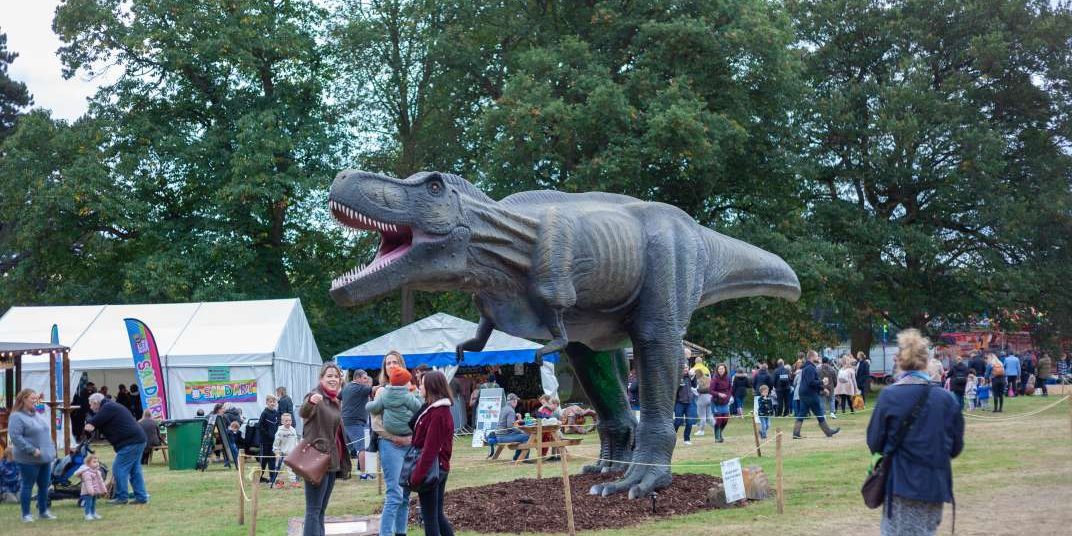
Star Factory Lantern’s day-to-night dinosaur strategy combines daytime animatronic exploration with illuminated nighttime scenes to help parks, resorts and public attractions plan a longer, more varied operating program from one coordinated project footprint.
(A daytime dinosaur installation creates close-range movement, sound and visitor interaction before the site transitions into its evening program.)
Star Factory Lantern’s approach combines animatronic dinosaurs by day with illuminated dinosaur lanterns after dark, turning one themed environment into two distinct visitor experiences.
The day-to-night dinosaur strategy responds to a practical venue question: how can a park add an evening reason to stay without developing two unrelated attractions? During the day, movement, sound, fossil exploration and tactile learning support family engagement. At night, illuminated sculptures, color, mist and programmed atmosphere reshape the same route into a visually different experience.
Star Factory Lantern, also known online as StarsLantern, is operated by Zigong Star Factory Culture Creative Co., Ltd. The company develops custom lantern displays, animatronic dinosaurs and outdoor themed attractions for international projects.
Build Daytime Exploration and Nighttime Illumination Into One Plan
A strong day-to-night dinosaur strategy is planned as one operating system rather than two separate purchases. The route, visitor capacity, service access, electrical zones, structural locations, ticket transitions and food or retail points should be coordinated before detailed production begins.
Tangible and tactile exploration
Use lifelike animatronic dinosaurs, fossil excavation areas, skeletons, tactile trails and educational interpretation to encourage movement through the site and close-range family interaction.
Illumination and atmospheric storytelling
Transform the route with steel-frame dinosaur lanterns, internal LED lighting, controlled color scenes, optional mist, sound and photo gateways designed for long-distance nighttime readability.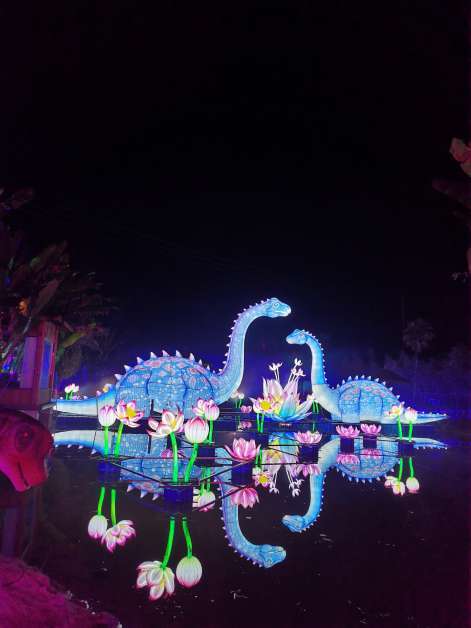
(Illuminated dinosaur forms, reflected light, scenic plants, color and atmosphere reshape the visitor route after dark.)
Use Animatronic Dinosaurs to Create Movement, Sound and Exploration
Daytime attractions depend on physical presence and believable detail. High-density foam, silicone or fiberglass surface systems can be developed around a steel structure and programmed movement system. Depending on the approved brief, actions may include head turns, jaw movement, breathing, blinking, tail movement and synchronized sound.
The animatronic route can be supported by excavation yards, fossil replicas, educational signs, walkthrough scenes and merchandise or refreshment points. These supporting elements help the dinosaur installation operate as a complete visitor journey rather than a row of isolated models.
Turn the Route Into an Illuminated Prehistoric Landscape
After dark, illuminated dinosaur lanterns change the visitor’s visual priority. Silhouette, brightness, color relationships and viewing distance become more important than close-range surface realism. A route may combine large dinosaurs, eggs, prehistoric plants, volcano scenes, arches and reflected-light features.
DMX or other approved control systems can coordinate selected lighting scenes, while sound and mist can be added where the venue, climate, maintenance plan and visitor separation allow. The final effects should be specified before production so electrical zones, controllers and access panels remain practical.
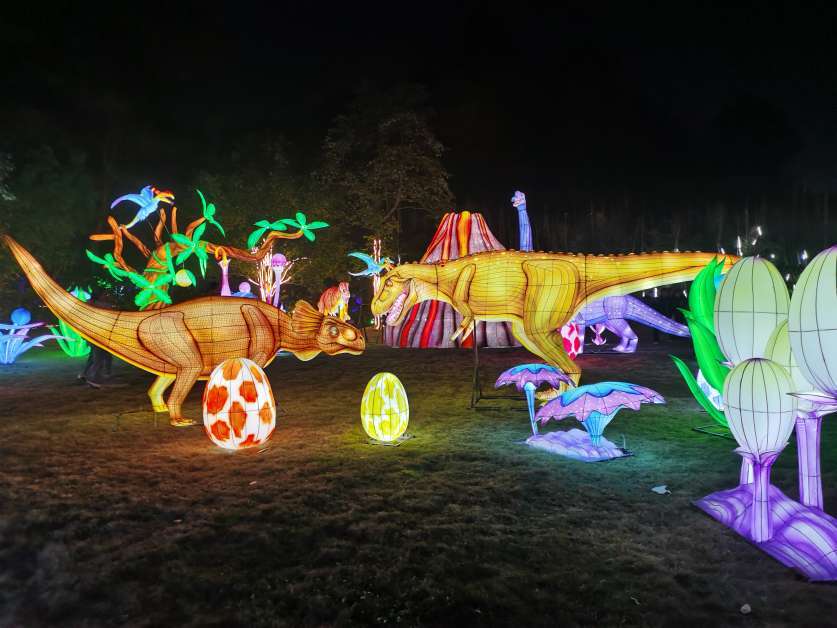
(Nighttime visual planning combines dinosaur silhouettes with eggs, plants, scenic depth and light intensity suited to the route.)
How the Day-to-Night Dinosaur Strategy Can Support Theme Park ROI
The commercial value comes from extending the use of the venue, not simply adding more dinosaurs. The model can support a longer operating window, a second reason to visit after dark and a coordinated ticket, dining, retail and photography plan.
Measured operating-window extension
Based on Star Factory Lantern’s project operating records, a measured day-to-night program extended the available visitor experience by approximately 2.5 to 4 hours during its recorded operating period.
Ticketing flexibility
The venue can evaluate separate daytime, evening or combined admission according to its audience, operating costs and event calendar.
Food, retail and photography
A longer evening program can create additional opportunities for concessions, themed merchandise and planned photo points.
Campaign content
Daytime realism and nighttime illumination provide different visual material for seasonal campaigns and visitor sharing.
Result boundary: the 2.5-to-4-hour figure is a first-party result from a measured project period, not a guaranteed outcome for every venue. Attendance, ticket yield, concession revenue and ROI depend on local pricing, demand, operating cost, weather, marketing and execution.
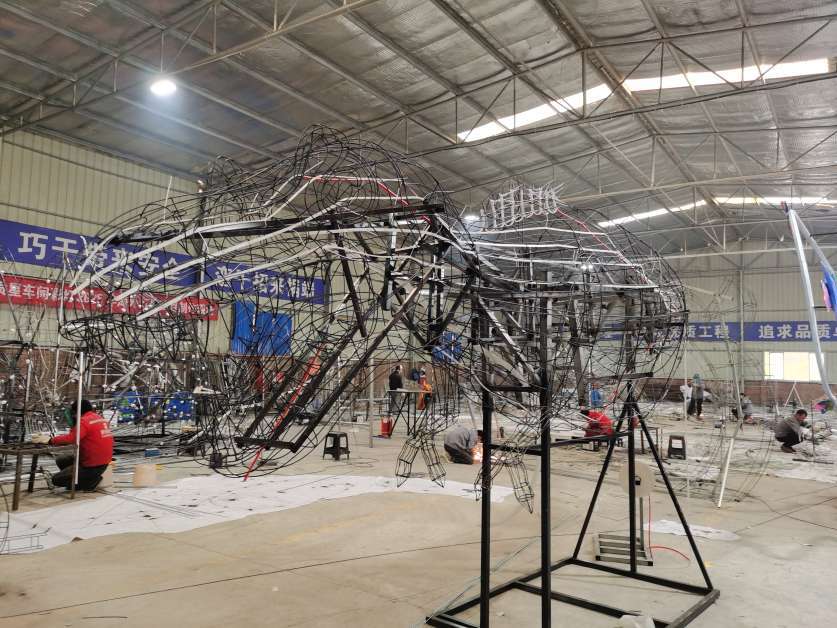
(A large dinosaur frame under fabrication shows the internal structure, modular divisions and access needed before surface and lighting work.)
Confirm Structure, Electrical Scope and Destination Requirements
Large outdoor dinosaur structures require project-specific review. Engineering planning should consider height, surface area, wind exposure, ground conditions, support, connection points, lifting access, visitor distance and the responsibility of the destination’s local engineer or approving authority.
The electrical system can use IP65-rated enclosures, UV-resistant cabling and leakage-protection devices. For EU-bound projects, applicable electrical equipment is supplied with CE marking and supporting conformity documentation according to the approved project specification.
For North American projects, UL Listed or UL Recognized components can be specified where the agreed scope requires them. CE and UL requirements are documented separately because they apply to different markets and product or component scopes.
Outdoor surface systems may include weather-treated, flame-retardant light-transmitting fabric for lantern structures and UV- or temperature-resistant silicone systems for animatronics. Final material selection follows the approved operating period, climate, maintenance plan and destination requirements.
What Venue Teams Should Confirm Before Production
A day-to-night dinosaur strategy should begin with the visitor route and operating plan, not only a dinosaur reference image. These six areas determine the quotation, design, structure, electrical zones, modular split, packing and local installation responsibilities.
- Visitor route — capacity, sequence and transition. Define daytime and evening entry, dwell points, queues, barriers, emergency access and how the site changes between operating phases.
- Site conditions — ground, wind, drainage and access. Provide dimensions, surface type, exposure, fixing restrictions, service roads, lifting access and available installation time.
- Electrical plan — voltage, zones, controls and service. Confirm destination voltage, cable routes, controller locations, operating hours, manual override, protection and maintenance access.
- Content mix — animatronics, lanterns and interaction. Choose dinosaur species, movement level, educational content, photo scenes, excavation activities, lighting effects and supporting scenery.
- Delivery — modules, packing and installation. Coordinate container limits, section labels, packing records, unloading equipment, local labor and remote or on-site supervision.
- Local review — welfare, safety and approvals. For zoos and public venues, plan around animal welfare, visitor separation, service access, local electrical rules and required engineering review.




Join us
Comments