
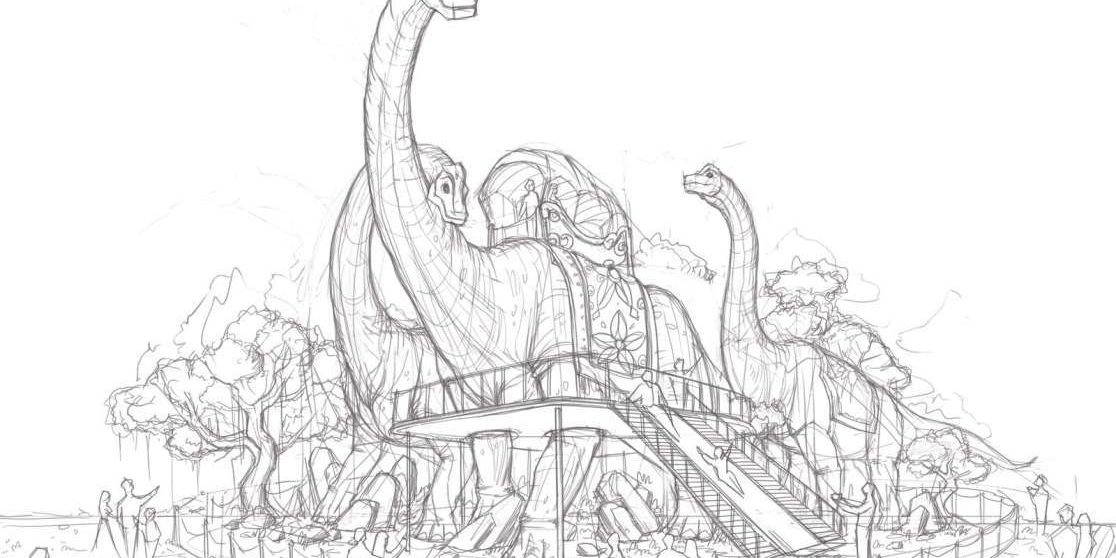
Almost every dinosaur exhibit looks good on opening day. The animals are clean, the paint is fresh, the animation runs at the pace the commissioning engineer set, and the queue is long enough that nobody is counting how long visitors actually stay.
Then comes the second season. And the third. And somewhere in there, an operator who spent a serious capital number on a herd of animals finds themselves looking at a paddock that visitors walk past rather than stop at.
The instinct is to blame the product. In most cases the product is fine. What failed was decided much earlier, in three places that are easy to overlook because none of them are about the dinosaur.
Failure one: the exhibit has no second act
A dinosaur is a single event. A visitor sees it, takes a photograph, and is finished with it in under ninety seconds. If that is the entire offer, the exhibit’s value is fixed on day one and declines from there — not because the animal got worse, but because the visitor already knows what happens next.
The exhibits that hold up are built as a sequence rather than a line-up. The animal is the hook, but the second act is what turns a ninety-second stop into a twenty-minute one: a feeding moment on a schedule, a keeper talk, a ride that leaves from the same clearing, a dig pit where children handle cast material. None of these need to be expensive. They need to exist, and they need to be positioned so the visitor is moving towards something rather than past something.
This is a layout decision, not a product decision, and it is usually made too late — after the animals are specified and the concrete is poured. We write about how a dinosaur trail is laid out around dwell time precisely because the sequence has to be drawn before the procurement list, not after.
Failure two: the animals were specified for the opening, not for the fifth season
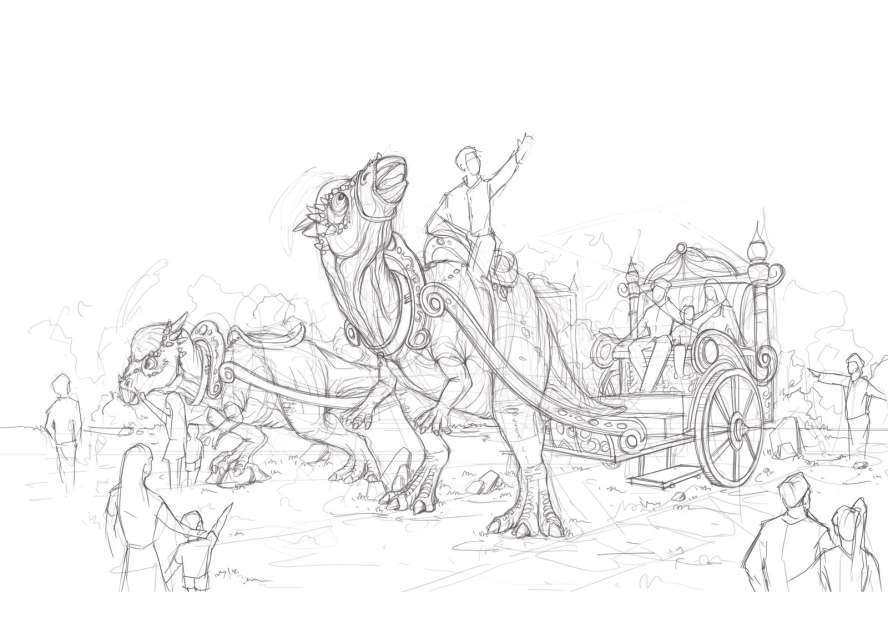
This is the failure that costs the most and shows up the latest. A dinosaur built to look correct on installation day can be built from materials that will not look correct in year three, and the difference is invisible in a photograph and invisible in a quotation.
Three places where it bites:
The frame. A standard steel frame inside a sealed skin is the classic outdoor failure. The skin looks intact while the frame corrodes from the inside, and by the time the movement starts to seize, the corrosion has been running for two seasons. On salt-air sites — coastal parks, aquarium precincts — this is not a maintenance issue, it is a specification issue, and it needs 316L stainless rather than a painted mild steel with a good topcoat.
The skin. Foam and paint is the cheap answer and it photographs well for one season. UV degrades the pigment, the surface chalks, and the animal goes from “reptilian” to “faded inflatable” without ever failing outright. Moulded silicone holds colour and texture far longer, and it can be repaired locally when a panel is damaged rather than requiring the animal to come out of service.
The duty rating. An animal rated for intermittent use and installed on a continuous cycle will wear its drives out in a fraction of the expected life. This is decided by the control programme, not the hardware — a fixed cycle running twelve hours a day is a different duty from a sensor-triggered animal that moves twenty times an hour. Ask which one the supplier specified, and ask what happens to the drives if the pattern changes.
None of these show up in a specification table that lists size, species and movement count. They show up in what sits under the skin, which is why the frame, the drive and the skin are worth understanding separately before a purchase order is written.
Failure three: nobody owned the maintenance
Almost every failed exhibit we are asked to look at has the same gap in its history: an animal developed a fault, the operator reported it, and nothing happened for four months.
The cause is rarely negligence. It is usually an unclear contract. If the supplier’s responsibility ended at commissioning and the operator’s maintenance team has never opened a control cabinet, then a jaw that stops closing is not a maintenance task — it is an unresolved question that nobody has budget for. Four months later the animal is standing still, visitors have learned to walk past it, and the whole paddock has lost its credibility.
What works is boring and cheap: a named person on each side, a written inspection schedule, a small stock of the parts that actually wear — jaw hinge, neck joint, tail root, and a pigmented repair kit matched to the original finish. Four parts and one name per side prevents most of the failures that get blamed on the product.
What to ask before the order, not after
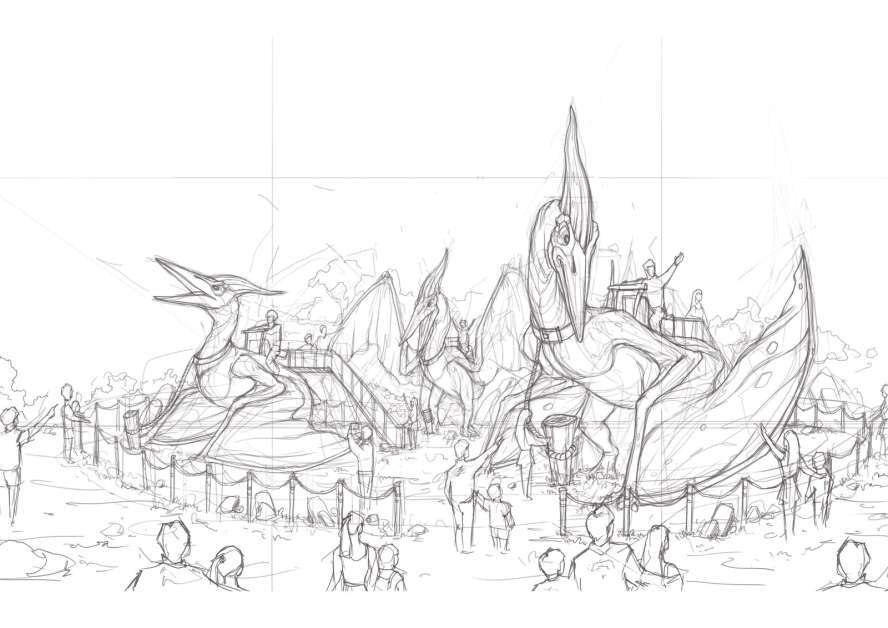
Four questions separate a supplier who has thought about year five from one who has thought about the photograph:
What is the frame material, and is it specified for this site’s corrosion class? “Galvanised steel” is an answer. “316L because the site is coastal” is a better one.
What is the duty rating, and what changes if we run a different cycle? If the answer is “it will be fine”, keep asking.
Which parts are expected to wear, and can we buy them individually? A supplier who cannot sell you a single replacement bone or hinge has not planned for a maintenance relationship.
Who signs off the site preparation? Power, drainage and hard standing cause more second-season problems than the animals do. A supplier who will review the site drawing before delivery is worth more than one who will not.
The economics that actually decide this
A dinosaur exhibit is not judged on how many animals it contains. It is judged on three numbers that operators can measure before committing: dwell time in the zone, repeat visits within twelve months, and the cost per season of keeping the exhibit in the condition it opened in.
The first two are design. The third is specification. An exhibit that is well sequenced and honestly specified gets cheaper every year it runs. One that is neither gets more expensive, because the fixes arrive late, one animal at a time, at emergency prices.
That is the whole argument for spending the extra week on layout and the extra conversation on materials before the order goes out. Not because better animals are nicer to look at — because the exhibit is still supposed to be working in year five.
Hongfeng Zheng is with HLTDINO, the animatronic division of Zigong Huilongtang Culture & Art Co., Ltd., which has built animatronic animals and mounted skeletons for museums, parks and aquariums in more than 40 countries since 2012.


Join us
Comments